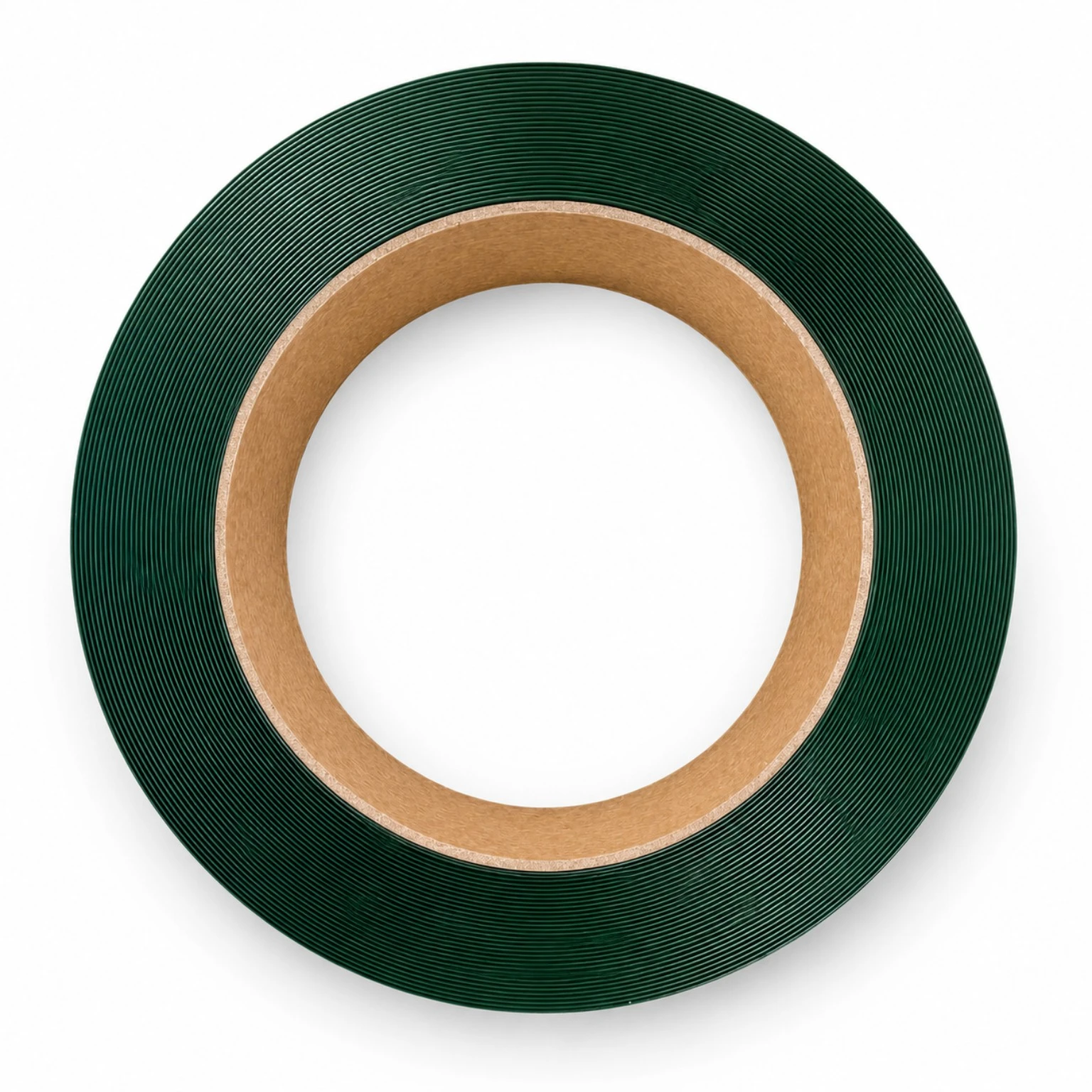
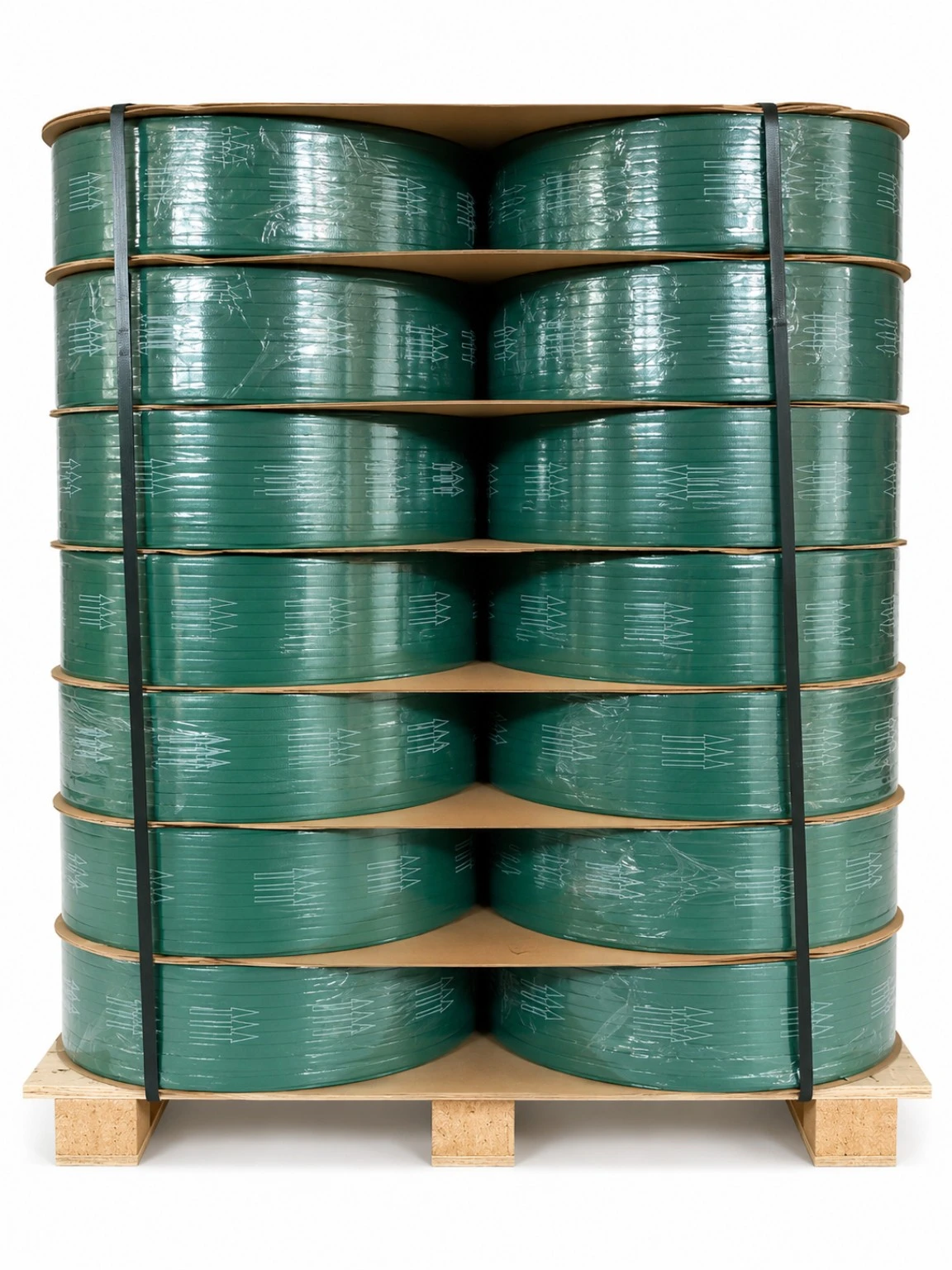
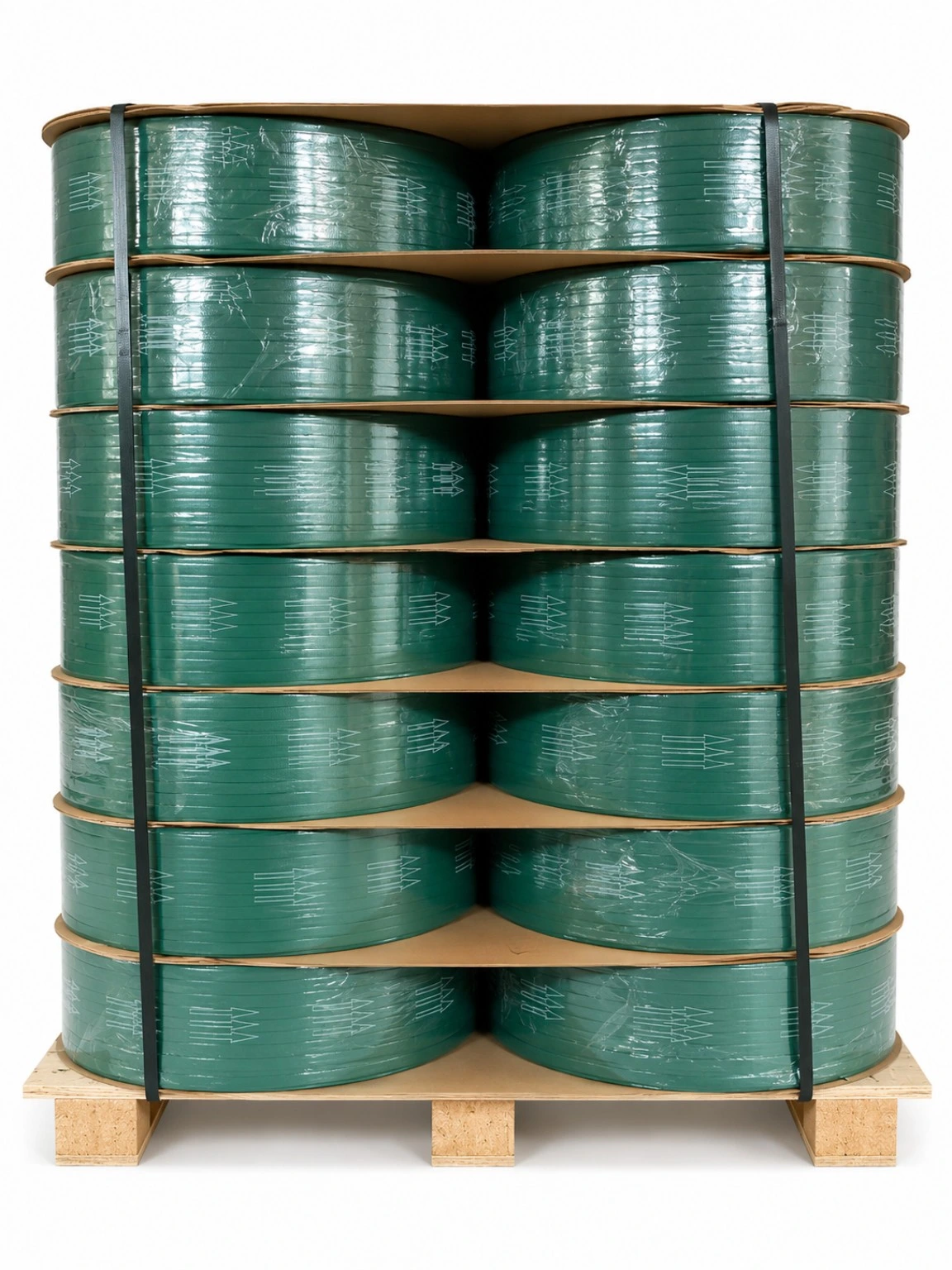
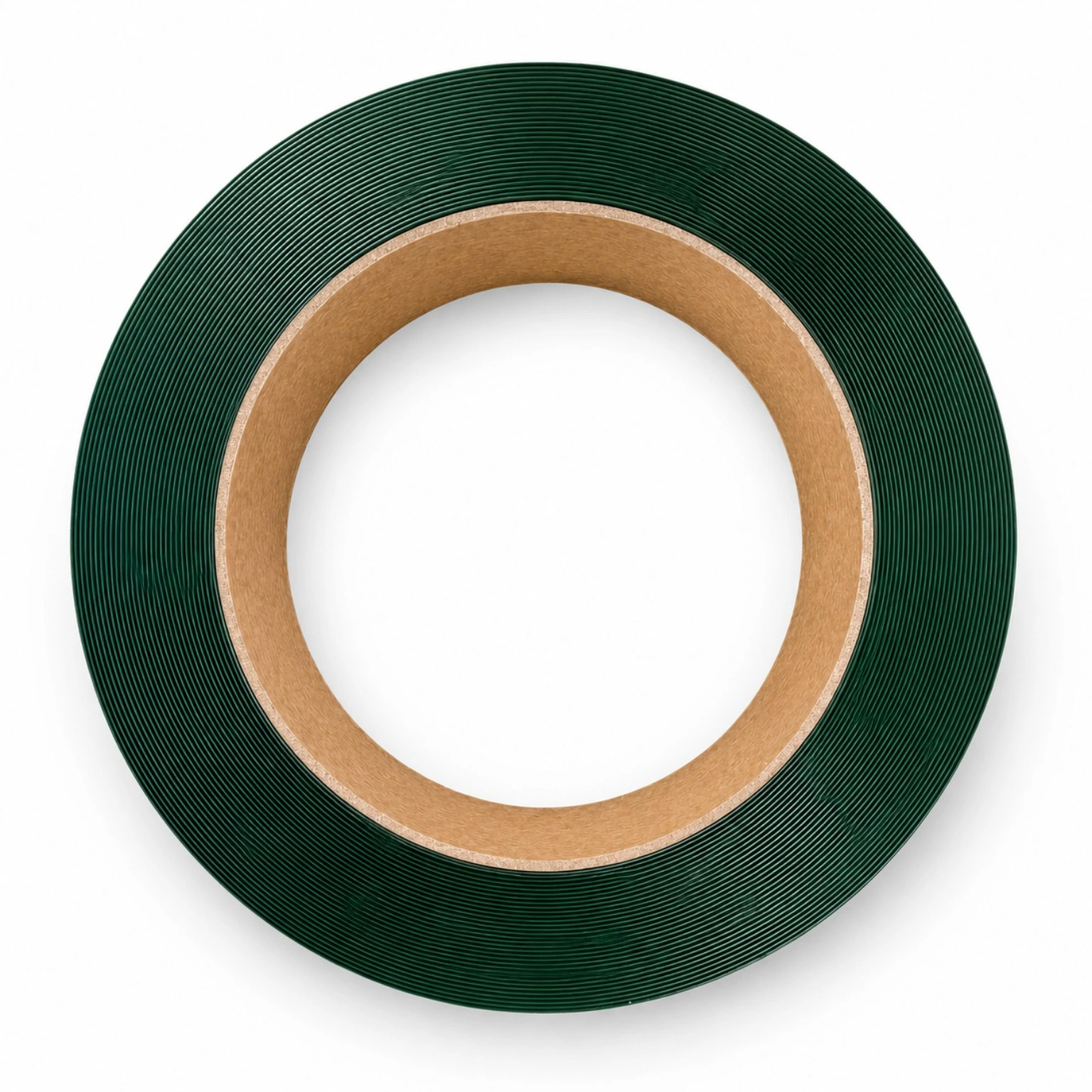
If you are securing lightweight cartons or packages, PP strapping may be sufficient in many cases. For heavier pallets, industrial loads and applications requiring greater strength, PET strapping is much more likely to be the right choice.
01
PET and PP - what is the basic difference?
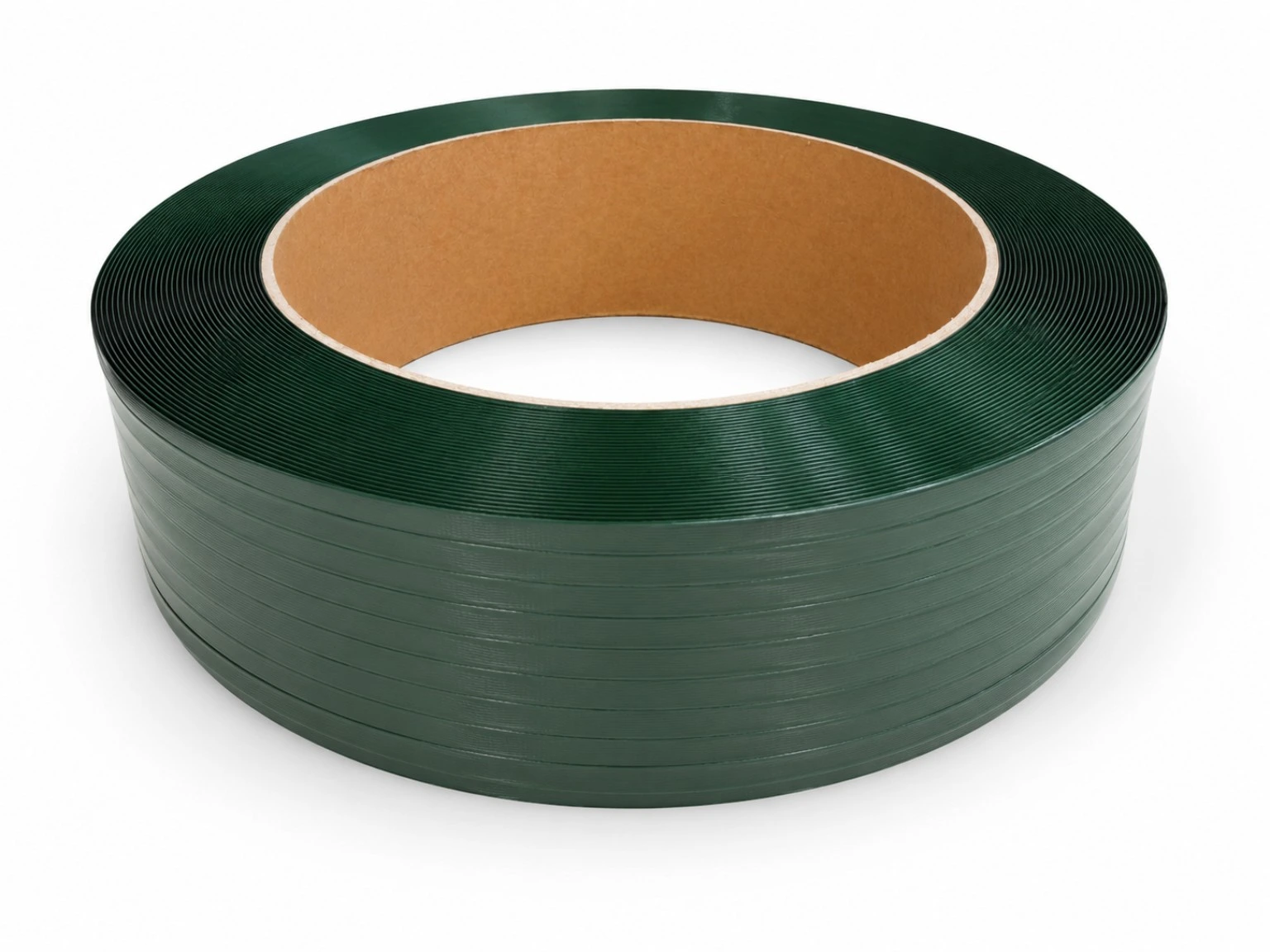
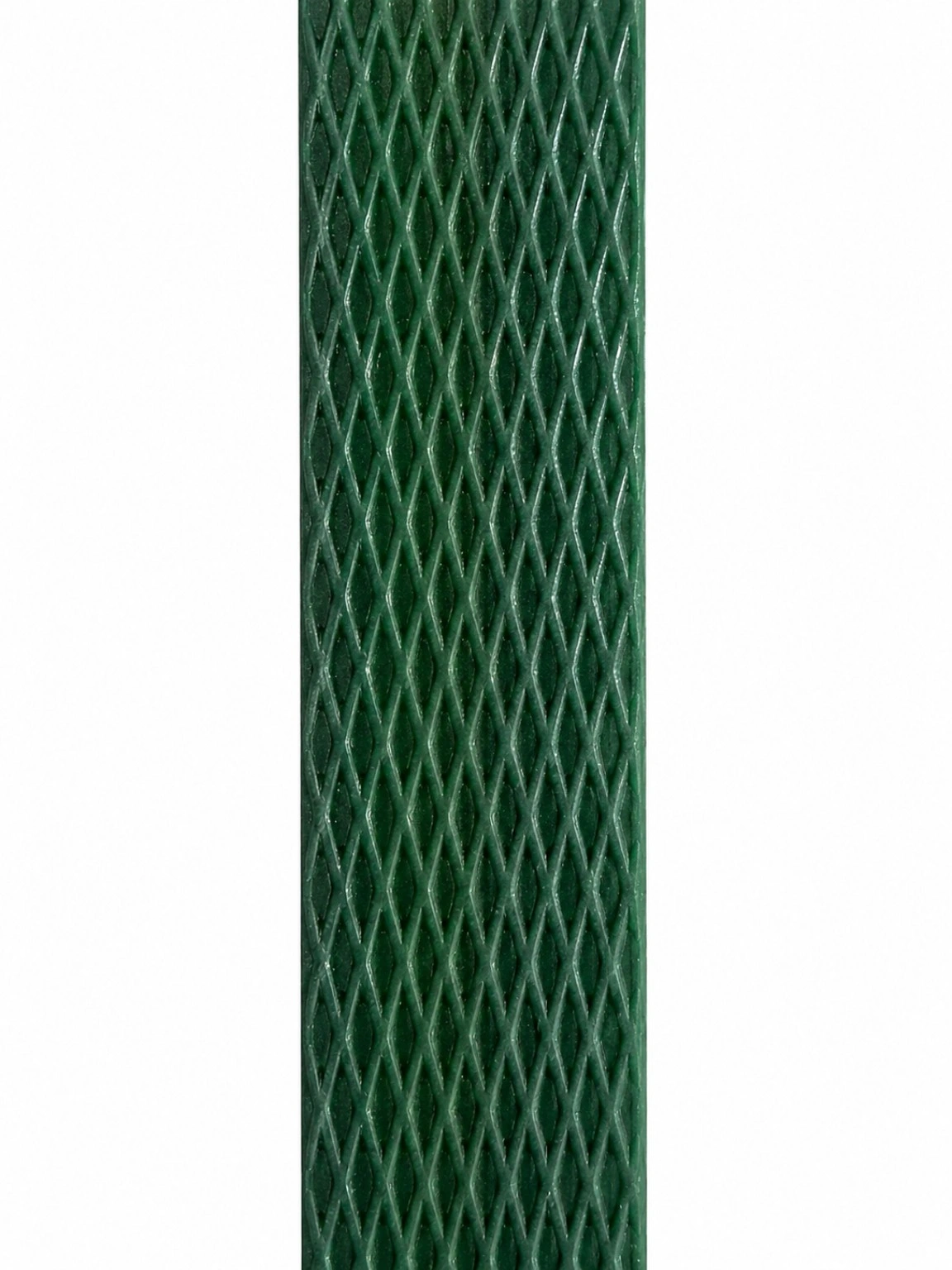
PET is polyester strapping used primarily where high strength, good tension retention and load stability are important.
PP, i.e. polypropylene, is usually used for lighter and less demanding packaging.
In practice, this means that the choice between PET and PP should result from the answers to several questions:
- how heavy is the load,
- is it stable?
- how many straps will be used,
- how it will be transported,
- how the strapping will be tensioned,
- what securing force is required.
At Level Up Group, we use this information as the basis for selecting the right solution.
02
When is it worth choosing PET strapping?
PET strapping is especially useful for medium and heavy loads where greater mechanical resistance and tension retention during transport are important.
This solution is particularly well suited to applications such as:
- pallets with heavier goods,
- building materials,
- industrial products,
- wood and construction elements,
- larger grouped loads,
- loads subject to repeated handling,
- transport over longer distances.
At Level Up Group, we offer PET strapping in several variants, allowing the parameters to be matched to a specific application.
Available widths are 12, 15 and 19 mm, and the breaking strength of individual variants is from 2,300 N to 6,300 N.
There is no need to choose the strongest variant automatically. The aim is to select the right width and thickness for the actual load.
03
When might PP be sufficient?
PP is used primarily for lighter packaging and loads that do not require very high strapping force.
It may be a suitable solution for, among others:
- cartons,
- packages,
- light grouped packaging,
- smaller shipments,
- light pallets,
- warehouse applications with lower requirements.
If the product to be protected is light and stable, the use of stronger PET may simply be unnecessary.
On the other hand, for heavy loads, choosing a strap just because it is cheaper may lead to improper securing.
04
Why is PET good for heavy loads?
For heavy pallets, it is not only the strength of the strapping that matters, but also how well it retains tension.
PET is a material that works well where we need to maintain the stability of a fastened load during transport and reloading.
For example, our offer:
- 12 × 0.58 mm
- up to 2,300 N
- 15 × 0.80 mm
- up to 4,200 N
- 19 × 1.00 mm
- up to 6,300 N
This shows how big the difference can be between individual PET variants.
Therefore, the term "PET strapping" is still not enough - its size and technical parameters also need to be selected.
05
PET or PP for a pallet?
There is no single answer here.
A light, compact and stable pallet may not require very strong strapping. However, if the load is:
- heavy,
- tall,
- susceptible to movement,
- irregular,
- reloaded many times,
- transported over a longer distance,
it is worth considering PET.
At Level Up Group, we consider not only the weight of the pallet but also the geometry of the load and how it is secured.
Two pallets weighing the same may require completely different strapping parameters.
06
The method of strapping is also important
The material should be selected according to how the strapping will be used.
PET strapping can be used in the following systems:
ManualBattery-poweredAutomatic
Therefore, before selecting a specific variant, it is also worth determining what device the client uses and how often strapping is performed.
A different solution may be optimal for a company securing several pallets a day, and another for a production plant operating continuously.
07
PET and steel strapping
For more demanding applications, PET can also be considered as an alternative to steel strapping.
However, this does not mean that every steel strap can simply be replaced with any PET.
When making such a change, you must take into account, among others:
- required load,
- breaking force,
- tensioning method,
- number of straps,
- product shape,
- the sharpness of its edges,
- transport conditions.
For demanding applications, select a specific variant before purchase rather than relying on strapping width alone.
08
Is stronger strapping always better?
No.
The strongest variant is not always the most suitable or economical choice.
If a strap with a lower breaking strength is sufficient for a specific load, there is no need to use a significantly oversized product.
Conversely, strapping that is too weak may require additional straps or provide insufficient load stabilisation.
That is why Level Up Group focuses on selecting the appropriate parameters, not simply selling the strongest strapping available.
09
PET or PP – what to choose?
The simplest way is to assume:
PPPrimarily lighter packages, cartons and less demanding applications.
PETMedium and heavy loads, pallets, industrial applications and situations requiring greater strength and stability.
But the final choice should always result from the specific application.